

About the High School
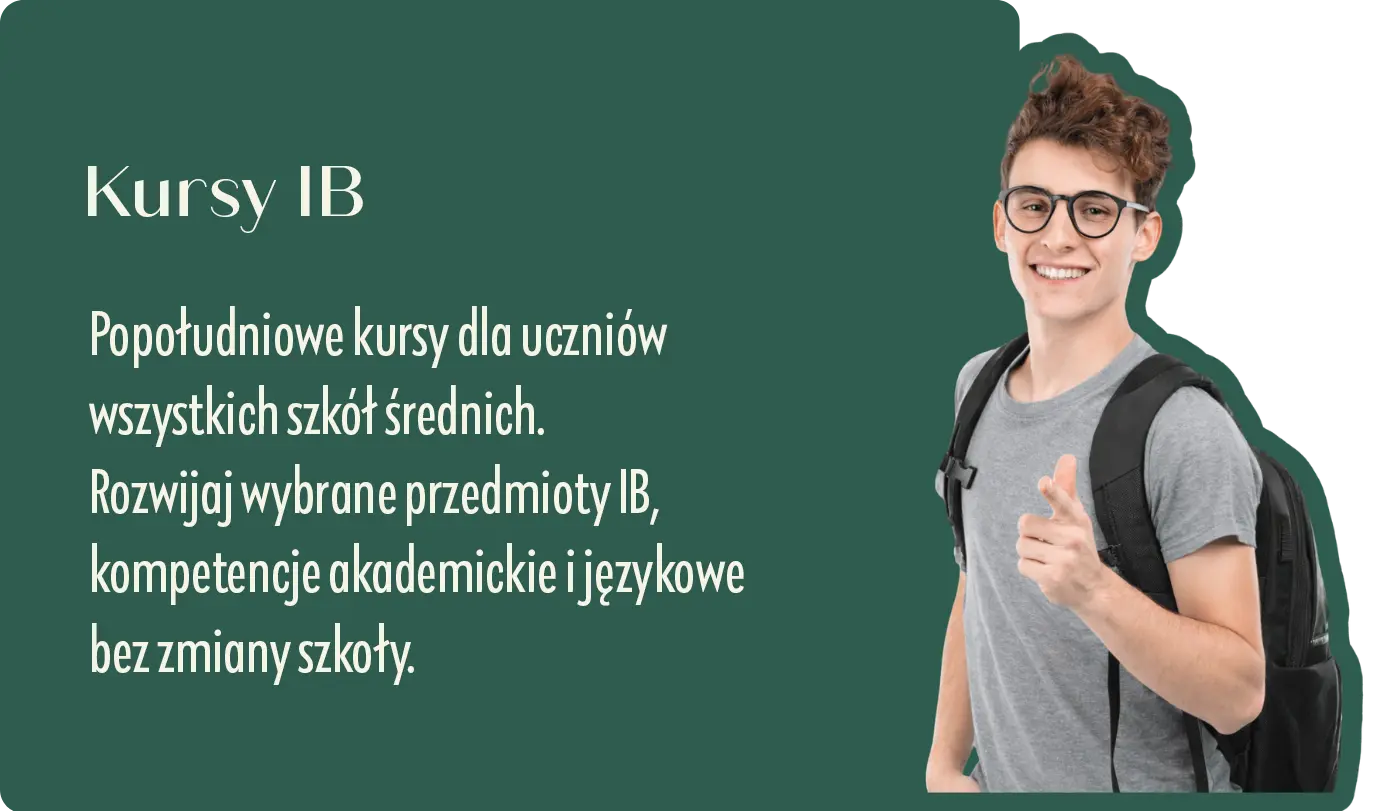
Explore the opportunities offered by LAS Academy High School. Choose the full International Baccalaureate (IB) Diploma Programme or develop selected subjects during afternoon IB Courses. Find out which path best suits your plans and ambitions.

LAS Academy High School in Sopot is a unique secondary school in the Tricity area. It’s a high school for young people who are curious about the world, ambitious, and ready to develop the skills needed in the 21st century. We combine high-quality teaching with a personalized approach, mentoring, and an education grounded in international values.
As a school implementing the International Baccalaureate Diploma Programme (IBDP), we prepare students not only for exams but also for informed functioning in a rapidly changing world. We develop critical thinking, independence, creativity, collaborative skills, and social responsibility.
At LAS Academy High School in Sopot, we believe that education should help students discover individual talents and strengths. Therefore, we create an environment that supports language learning and academic and artistic development, while also teaching openness to cultural diversity and respect for other perspectives.
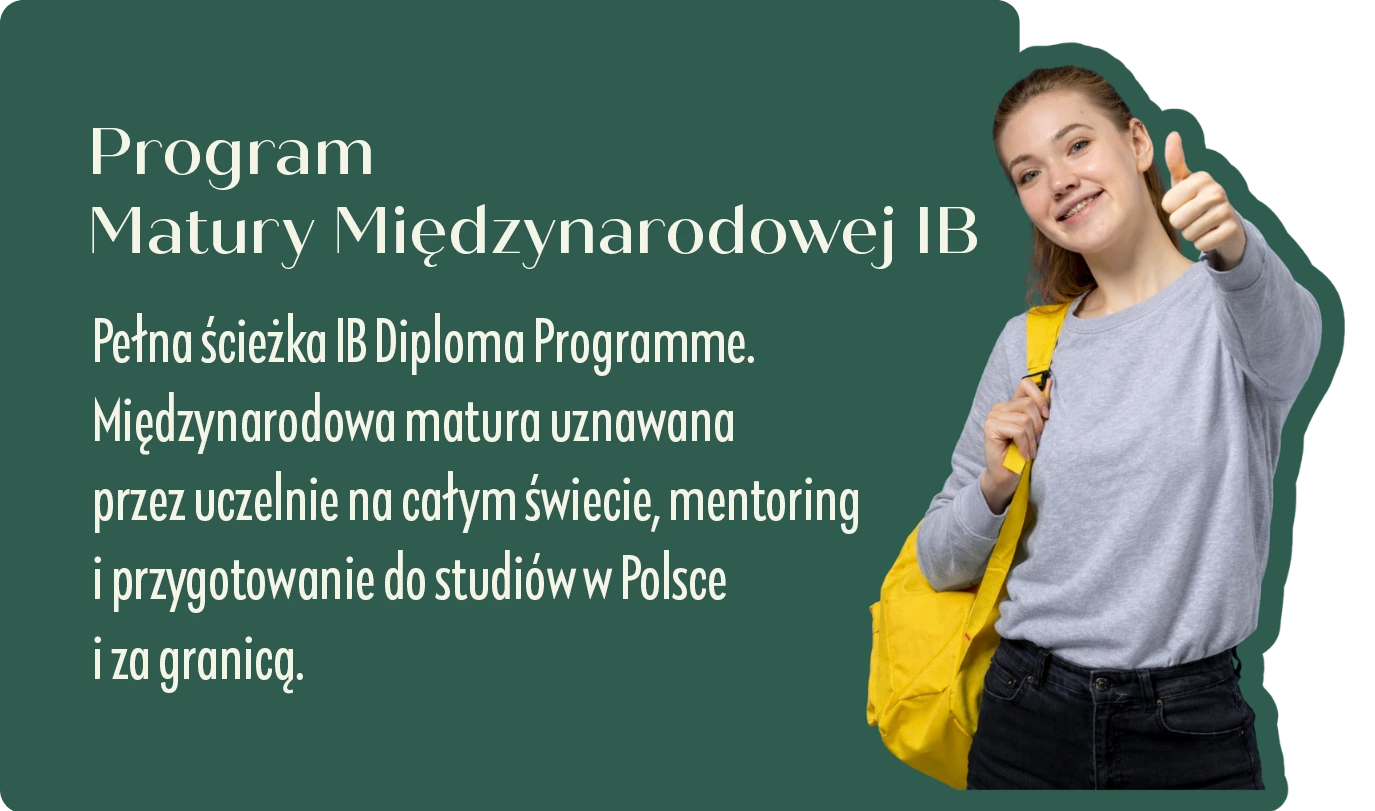
Students can choose the full IB Diploma Programme or pursue specific interests through IB courses offered in the afternoons. This allows them to acquire competencies valued by universities in Poland and around the world and prepare for further education and a professional career in an international environment.
For more information about our LAS Academy High School in Sopot, please visit our dedicated FAQ section. To learn more about our course offerings, please review the FAQ about IB Courses. For more detailed information, we also encourage you to review the brochures available here.
 |
 |
The graduate leaving our walls is a bilingual student, with the ability to pursue goals, knowing their strengths, sensitive to art, creative, with a healthy sense of self-esteem and proficient in using both hard and soft skills. The high school recruitment form can be found here
Our advantages
Bilingualism and the IB Matura
Introduction to studying abroad.
W globalnym świecie, umiejętność posługiwanie się dwoma językami (angielski i język ojczysty) to już niezbędne minimum. Część przedmiotów w naszym liceum prowadzonych jest w języku angielskim, a językiem wykładowym dla przedmiotów
maturalnych matury międzynarodowej (IB) jest angielski. Matura międzynarodowa (IB) zwiększa szansę na studiowanie na uczelniach za granicą jak i w Polsce. Uczeń zdaje maturę IB z 6 przedmiotów, z czego 3 w wersji Standard Level oraz 3 w wersji High Level.
Growth Mindset
Growth mindset
A growth mindset is the belief that our abilities and intelligence can develop through effort, study, and perseverance. This concept was developed by psychologist Carol Dweck and demonstrates how our beliefs about our own abilities influence the learning process and the acceptance of challenges.
Impact in school:
1. Motivation to learn – students with a growth mindset believe they can improve their skills, which encourages them to put in more effort.
2. Approach to challenges – they view difficulties as opportunities to learn, not as threats to their self-image.
3. Attitude toward mistakes – mistakes are perceived as valuable feedback, not evidence of a lack of ability.
4. Better academic performance – studies have shown that individuals with a growth mindset achieve better results than those with a fixed mindset.
5. Development of social skills – students are more willing to cooperate, ask for help, and engage in the learning process. At our school, we have supplemented the growth mindset with a proprietary program for evaluating learning progress, which we have implemented and continuously expanded since 2019. Based on scientific research and practical experience, our program emphasizes skill development rather than assessment (as others see me), supports self-esteem, provides precise feedback, and develops metacognition – one’s own evaluation of learning progress.
Mentoring and internships
Student Development Path
A student-centered development path supported by one or more mentors. Mentoring is a tool for personal and professional development. Here’s why it’s worthwhile:
• Inspiration and motivation – a mentor, often a more experienced person, helps discover new opportunities, motivates, and shares valuable perspectives.
• Competency development – it’s not just theoretical learning, but also practical guidance on careers, soft skills, and decision-making.
• Relationship building – mentoring fosters valuable connections and opens doors to new environments.
Tutoring differs from mentoring in several key ways:
• Tutoring – It focuses on specific skills and knowledge. The tutor teaches a specific subject, helping the student understand the educational content.
• Mentoring – Covers broader personal and professional development. The mentor supports the student in achieving goals, making decisions, and developing competencies.
• Professional internships – after first, second, and third grade, students complete a one-week professional internship at a company of their choice. The entire process of choosing a career path and discovering the student’s potential is supported by the school and mentors throughout the school year.
Versatility
From elementary school to high school, we continue three areas of development: Language, Art, and Science. Choosing an academic path is a difficult task for eighth-grade graduates choosing high school, as well as for high school students faced with choosing a field of study. Therefore, we support students in choosing their development paths, and our education is comprehensive, providing opportunities for subsequent changes and adaptation to needs. Versatility is a desirable trait, the importance of which has increased from decade to decade, reaching its highest value during COVID, where quick adaptation to conditions, learning new things, and a broad perspective were paramount. Today, versatility is sought in business, and versatile scientists (those who, in addition to their professional work, play an instrument, paint, write books, or engage in photography) are much more likely to achieve spectacular scientific results.
Cognitive acceleration
This is a program we introduced in Poland, and so far, we are the only school using it. The program encourages students to engage in higher-order thinking, problem-solving, and reflection on their own learning. Research has shown that students participating in the program achieve better results in GCSE math exams, and their grades can increase by up to 0.8 grade points. Additionally, the cognitive acceleration program positively impacts performance in science and English.
Music
Research studies in recent years have demonstrated the enormous impact of music (playing an instrument, vocals) on students’ cognitive development. The effect is stronger the longer the duration of music education. A study conducted in Canada involved over 113,000 students engaged in musical training, who, after years of practice, outperformed their peers without musical training academically by over a year. At our high school, students can pursue music education through a popular music (jazz) program—playing piano, bass guitar, drums, or choosing a vocal track.
Music band
We dedicate time in our lesson plans to weekly rehearsals for student-created ensembles. Playing in a music ensemble offers not only musical development but also many other benefits! Here are some reasons to join:
• You develop your skills – playing together requires synchronization, creativity, and technique refinement. The ensemble helps you better understand rhythm, harmony, and composition.
• You build relationships – music brings people together! Joint rehearsals, concerts, and songwriting strengthen the bonds between band members.
• You shape your personality – you learn communication, patience, and cooperation. In a team, it’s important to listen to others and adapt to a common sound.
• You gain stage experience – playing live in a band allows you to develop self-confidence, become familiar with the stage and interact with the audience.
• You experiment and create – a band is a great environment for improvising and composing new songs. You can be inspired by different styles and develop your creativity.
Drawing and design
We’ve incorporated weekly drawing, painting, and spatial design classes into our lesson plans so students can develop their imagination and spatial awareness. These classes will not only prepare students planning to study architecture, but will also allow everyone else to broaden their horizons and enhance their cognitive processes, as scientific research demonstrates. Students with greater imagination and spatial awareness perform better in language arts, mathematics, art, and music classes.
Science
Science subjects are developed through hands-on activities in a well-equipped laboratory. Learning these subjects isn’t just about acquiring knowledge, but also developing skills that can impact your future! Here are some reasons why it’s worth learning them:
• You develop critical thinking skills – science helps you analyze facts, draw conclusions, and solve problems logically.
• You’ll understand the world around you – from the functioning of the body to the cosmos – science allows you to better understand how reality works.
• Experimentation is creativity – learning isn’t just about memorization! In the lab or in class, you can test hypotheses and discover new things.
• Impact on the future – knowledge in fields such as biology, chemistry or physics can help solve global problems such as climate change or medicine.
• Technology is changing the world – science is the basis for modern innovations, from artificial intelligence to renewable energy sources.
21st Century Competencies
We view the school not only through the lens of academic subjects, but also through the 21st-century competencies we want our students to acquire throughout their years of education at LAS Academy. These include:
• Analytical thinking and flexibility of thought -> implemented through increased hours of science classes and a cognitive acceleration program requiring flexible thinking
• Stress resistance -> participation in frequent speeches, concerts, presentations, and psychology workshops
• Leadership and social influence -> individual leadership of project teams
• Creativity -> improvisation and musical composition, drawing and design classes, and creative criteria for subject areas
• Motivation and self-awareness -> students self-assess their knowledge, motivation, and learning progress.
• Technology literacy -> classes in ecoPracownia, individual science projects, robotics, and programming
• Empathy and active listening -> LAS methodology and psychology workshops support active listening and empathy
• Curiosity and lifelong learning -> conducting classes in a non-traditional, inspiring, and comprehensive approach
Predictors of success
There are many predictors that are important in life, because good academic performance is not a guarantee of success. At our school, we develop several additional elements:
• Conscientiousness in pursuing goals -> “life is more of a marathon than a sprint” – Angela Duckworth – the effect of the music program we offer fosters conscientiousness and systematicity
• Attention, working memory, and behavioral control -> the Stanford University marshmallow experiment – in a study, researchers found that children who were able to wait longer for preferred rewards tended to have better life outcomes, measured by high school exam results, educational achievements, body mass index (BMI), and other life metrics. Researchers indicate that music training is an excellent opportunity to work on focus, working memory, and self-control. • Growth Mindset -> approaching failures constructively and not focusing on judging yourself through the prism of others is a key element of coping with life.
• Openness and passion -> people who are open to new experiences and curious about the world cope better in life – in the future, only change is certain, so dealing with challenges, new knowledge, and acquiring new skills is a standard in the 21st century – versatility is the key to success.
